A gate that knows its own.
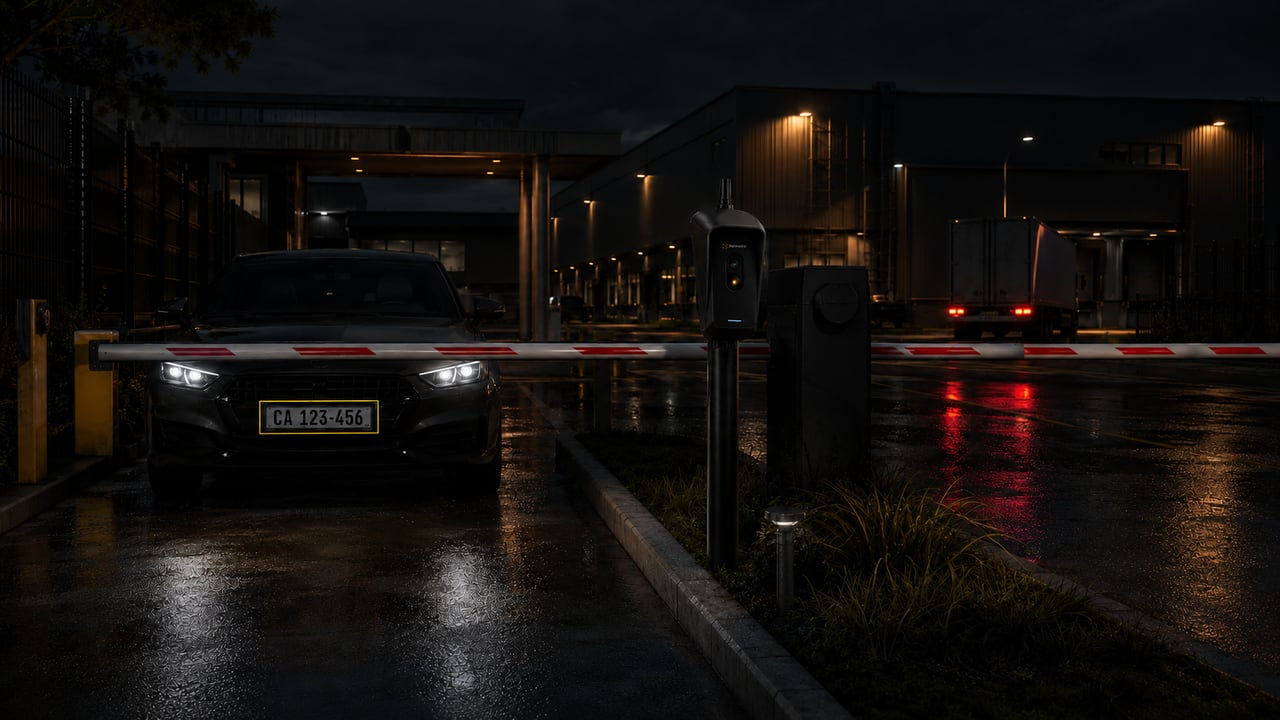
A camera reads the licence plate, a local decision engine determines in ~30 ms whether the vehicle is authorised, and opens the barrier — even without internet. Vehicle access control for car parks, logistics centres and industrial gates.
- ~30 ms
- Decision made locally at the gate
- Offline
- Works with no network connection
- GDPR
- Licence plates encrypted, access audited
Manual access control can't keep up — and leaves no trace.
A remote, an intercom and a paper visitor log don't scale to the traffic that car parks and logistics sites see today.
- Remotes get lost, copied and aren't returned after someone moves out — you never really know who has access.
- A concierge or guard at the gate is a fixed cost, and even then there's no complete record of entries.
- Visitors and suppliers block the entrance while they wait to be let in manually.
- After an incident there's no reliable record: who entered, when and in which vehicle.
Read → local decision → barrier. In a fraction of a second.
The entire decision loop happens at the gate, on the device. The cloud is the source of the access policy and the place where events are recorded — it never takes part in the real-time decision.
- 01
Licence plate read
The camera reads the licence plate of the approaching vehicle. The image is analysed locally and never leaves the device.
- 02
Local decision (~30 ms)
The engine compares the licence plate against a signed, local copy of the permissions list. The decision is made on the spot — with no call to the network.
- 03
Barrier opens
Authorised vehicle — the barrier opens automatically. Unauthorised — it stays closed, and the operator can open it remotely.
- 04
Event for the audit
Only an event trace reaches the cloud (entry authorised/denied, time, gate) — never a photo or a licence plate in clear form.
The permissions list is signed and stored locally, so the gate works even with no internet. Once connectivity returns, events sync.
Everything a property manager and security team need.
-
Permission lists and groups
Employees, fleets and suppliers in separate groups with their own rules and a shared access policy.
-
Schedules
Permanent, recurring or one-off access — with an expiry date and a daily entry limit.
-
Visitor passes
A temporary pass with a validity window and an entry limit. Revocation takes effect immediately.
-
Remote opening
The operator opens the gate remotely — always with a reason given and an audit record (MFA where required).
-
Live view
Who is at the gate and the state of the barrier — in a single view, in real time.
-
Audit and export
Every decision in a tamper-proof log. Export to CSV/PDF — without licence plates by default.
A barrier that won't close on a vehicle.
The safety of people and vehicles takes precedence over every decision the system makes.
-
Sensor priority
An induction loop or photocell takes precedence over every command — the barrier will never close on a vehicle or person in the passage.
-
Fail-safe by default
In the event of a fault, the system defaults to a safe state. Fail-open mode for fire lanes is always explicitly configured and audited.
-
Machinery compliance
Barrier control is designed in line with EN 12453 and the Machinery Directive.
A licence plate is personal data — and we treat it that way.
Gate has a reversed privacy profile compared with the rest of Perimetro: it deliberately processes licence plates, so it surrounds them with the strongest protection.
-
Separate, encrypted database
Licence plates are stored in a separate database, encrypted with a key assigned to the client.
-
Audited access to the licence plate
Viewing a licence plate in clear form requires a reason and leaves a tamper-proof entry in the log.
-
This is not biometrics
A licence plate is an assigned identifier, not a biometric trait — Gate does not recognise faces or people.
-
A decision with the option to intervene
An automated decision always has a manual operator override (GDPR Art. 22). The bridge to the detection layer carries only a trace without the licence plate.
Gate has its own standalone basis for compliance (GDPR / licence plate), independent of the rest of the Perimetro platform.
GateController — edge AI at the gate.
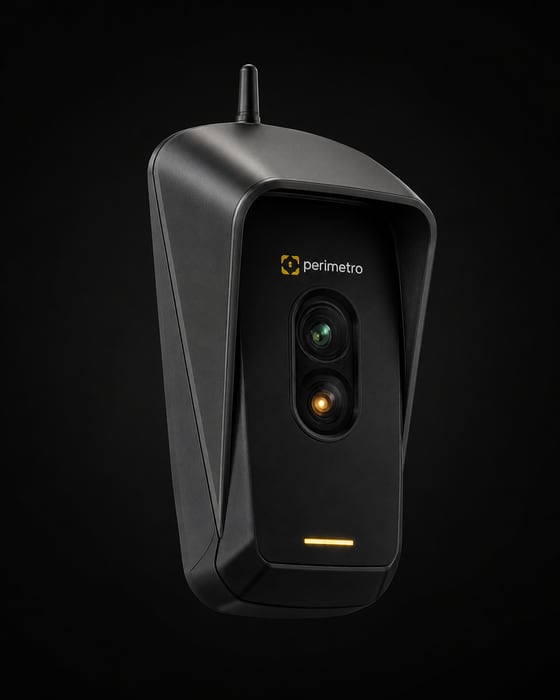
Each lane runs a complete kit: the camera reads the plate, a local edge-AI module makes the decision and a controller raises the barrier. Image analysis runs on the device — the photo never leaves the gate.
- Licence plate reading camera with illumination (day/night)
- Local edge AI decision module
- Barrier controller (relay / contact / Wiegand)
- Loop sensor or photocell input
- LTE / Ethernet connectivity, offline operation
- Local, signed event log
Entry without a remote and without phoning security.
Anyone authorised to use the mobile app handles everything themselves — from their phone.
- Open the gate from your phone
- Manage your own vehicle licence plates
- Issue passes to guests yourself
Wherever smooth, recorded entry matters.
Most often sites outside NIS2 — with a shorter decision cycle than critical infrastructure.
- Business parks and campuses
- Car parks and office buildings
- Logistics centres and parks
- Industrial and commercial gates
The questions we hear most often.
-
Does the gate work without internet?
Yes. The permissions list is signed and stored locally, and the decision is made on the device in ~30 ms. Events sync with the cloud once connectivity returns.
-
What happens during a power or network outage?
The system defaults to a safe state (fail-safe). Fail-open mode for fire lanes is configured explicitly and recorded in the audit. A sensor in the passage always has priority.
-
Is this facial recognition or biometrics?
No. Gate reads the licence plate — an assigned vehicle identifier, not a biometric trait. We do not recognise people.
-
How are licence plates protected?
In a separate, encrypted database with a client key. Viewing a licence plate in clear form requires a reason and leaves a trace in a tamper-proof log. Exports do not contain licence plates by default.
-
Does Gate connect to the rest of Perimetro?
Yes, on a single account — but the bridge to the detection layer carries only a de-identified event trace (without the licence plate). The databases are kept separate.